

Pivot is a three piece furniture collection developed in collaboration with Philly of Ulric, a company based in Tianjin, China. This collection promotes dynamic relationships in small living spaces for users who resides in busy urban cities.
About
3rd Year Industrial Design Project (ECUAD)
My Role
3D Modeler
Industrial Designer
Graphic Designer
Team
Ruth Weng
Grace Degelman
Software
Solidworks, Modo, InDesign, and Illustrator
Timeline
Jan - April 2020 (4 Months)
Problem Space
Currently most families in China are living in homes with around 90-130 meter square.
There is a lack in understanding of maximizing spaces in a small living space to provide a positive living experience for a typical user around their daily commitments such as eating, siting, and storing .
Hopefully our design can encourage a better use of space in these types of living quarters, while providing users opportunities to promote a stronger relationship with themselves and their home.
Challenges
How do we encourage dynamic behaviour that improves people's living experiences in a small living environment?
How do we create a sustainable collection, while each separate component still has a relationship with each other in different areas of the home?
Timeline
Our timeline had three main phases: research (client, users, ergonomics, and Chinese culture), prototyping (2D and 3D), and final documentation package (rendering, orthographic, and video), which was sent off to our client at the end of the project.

Research
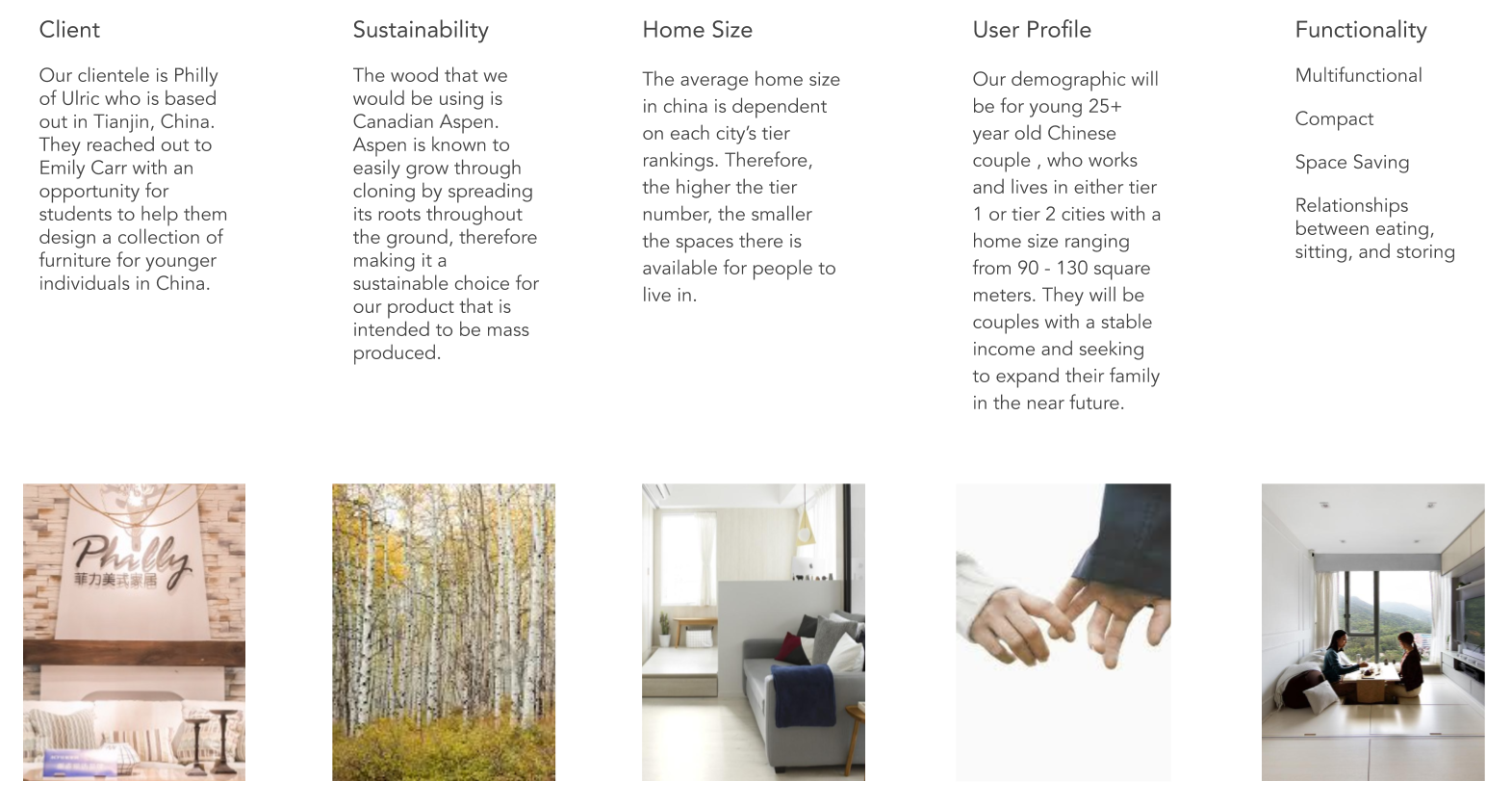
Brainstorm
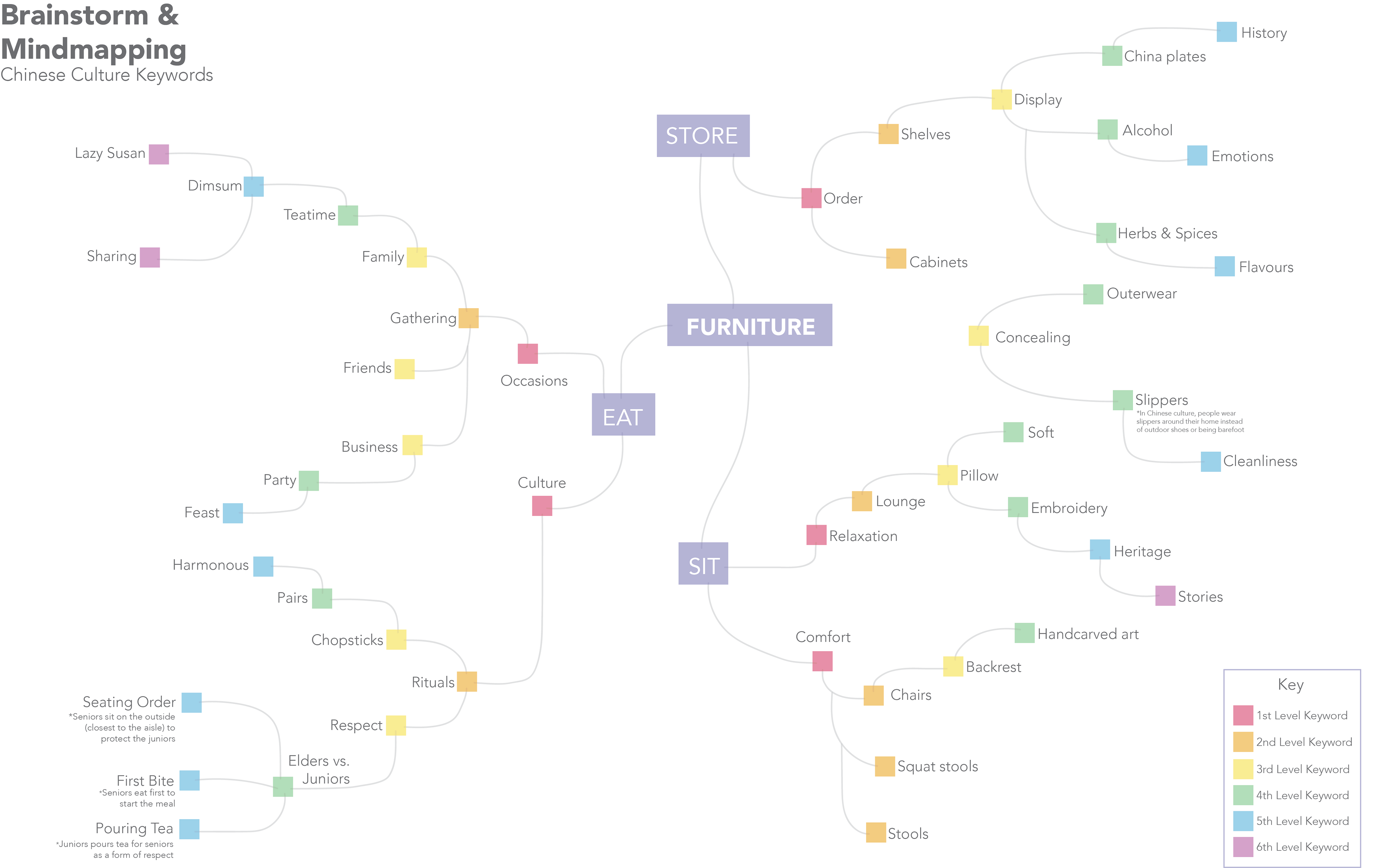
Through our initial research, we were able to refine and summarize what captured our most attention. Through doing so, we were able to then create a map to rank the most important to least important keywords through brainstorming and mind mapping Chinese Culture. The main concepts to our three piece furniture set is eat, sit, and store.
1st Critique: Sketches & Prototypes
1st Critique
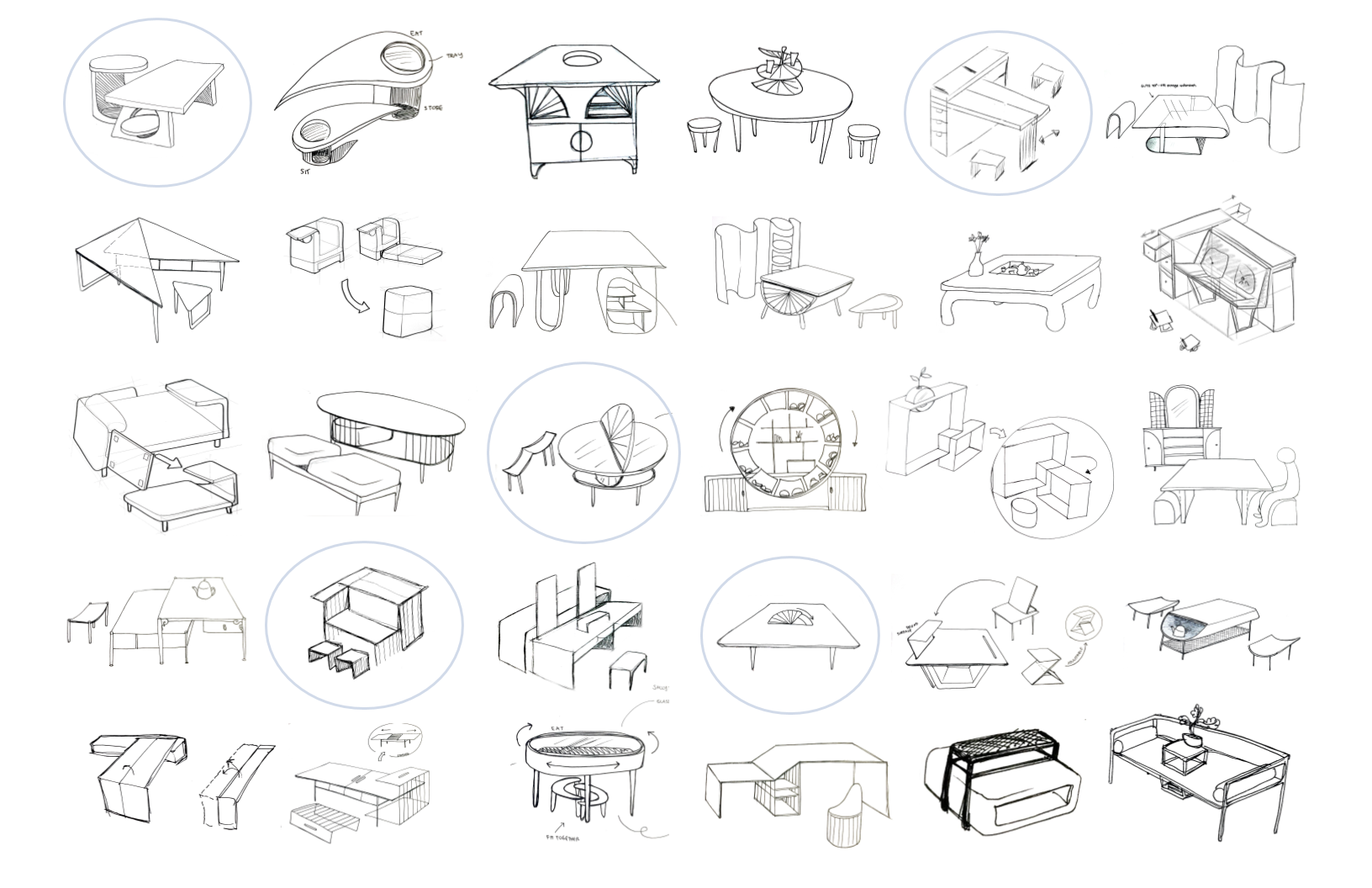
After receiving feedback on our first critique, we narrowed down our concept by focusing on which design had the best functionality, overall design strength and feedback that we received. We narrowed it down to the collection of sketches on the left and further selected five of these designs that spoke to us, while also taking important aspects from other sketches.
1:1 Prototypes
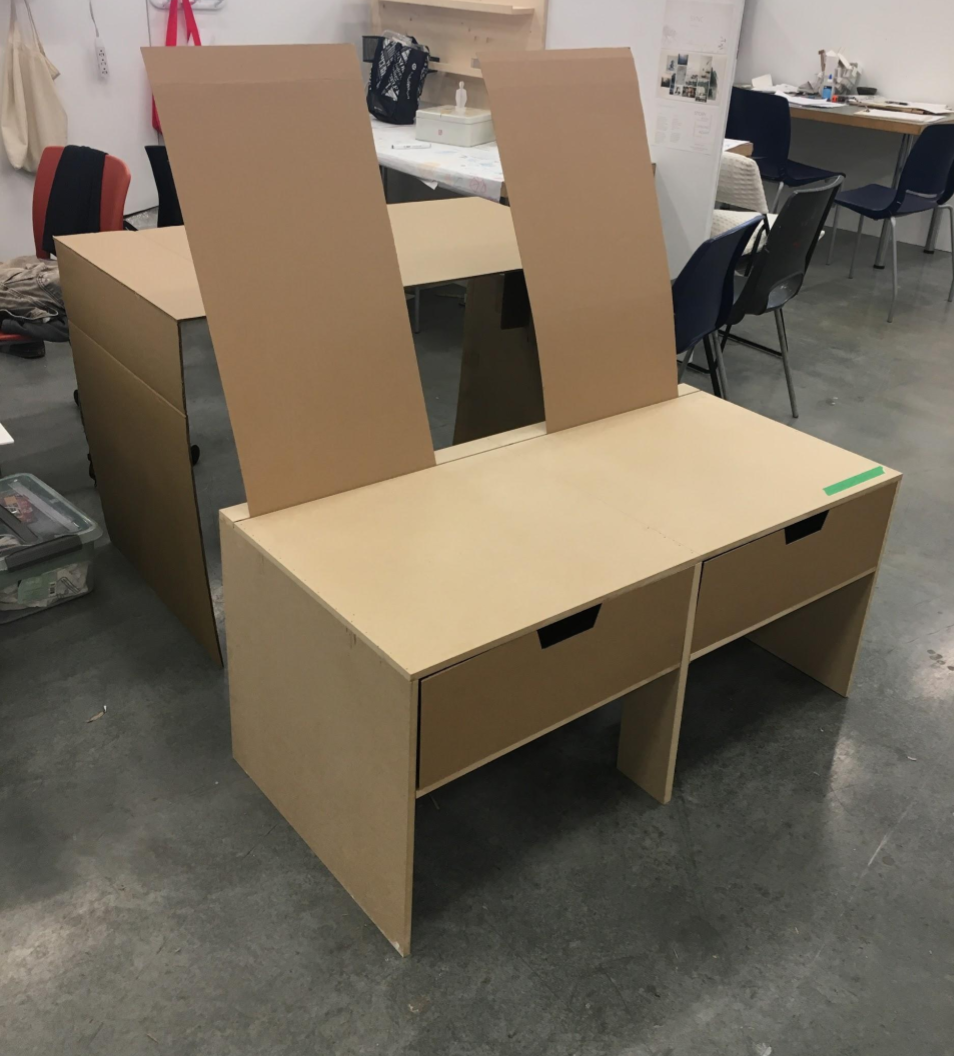
Prototype #1
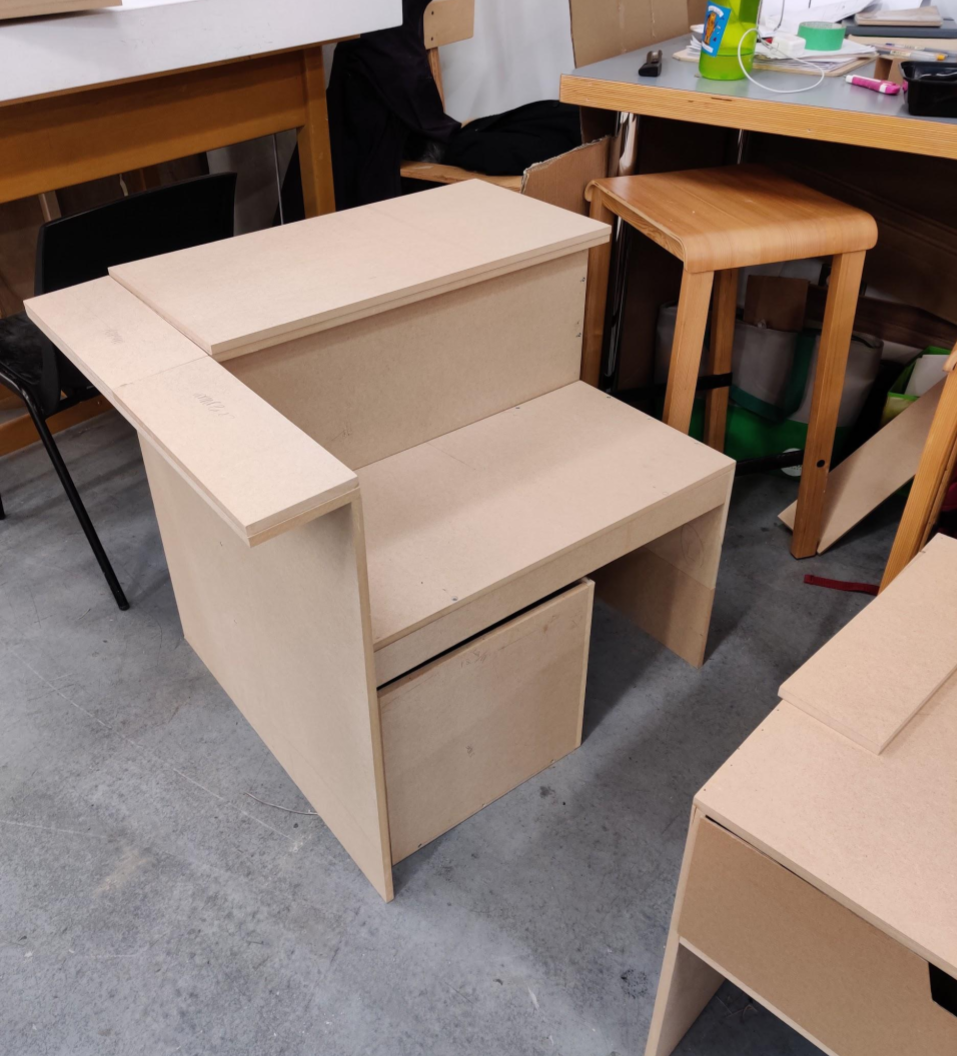
Prototype #2
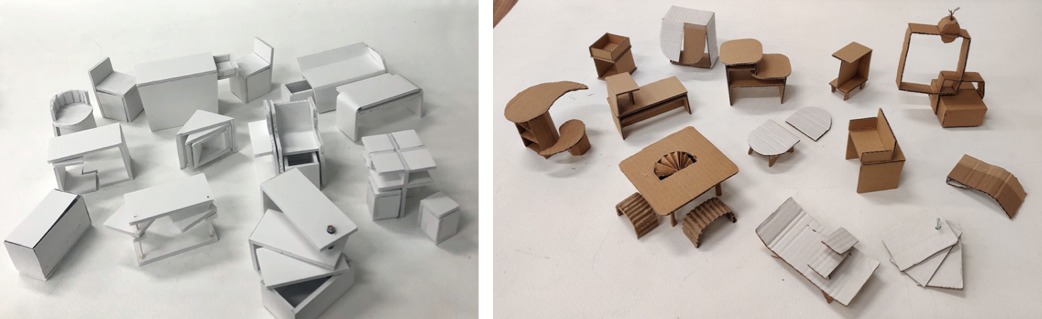
These were two of our initial ideas that we built based on our sketches.
2nd Critique: 1:1 Prototype
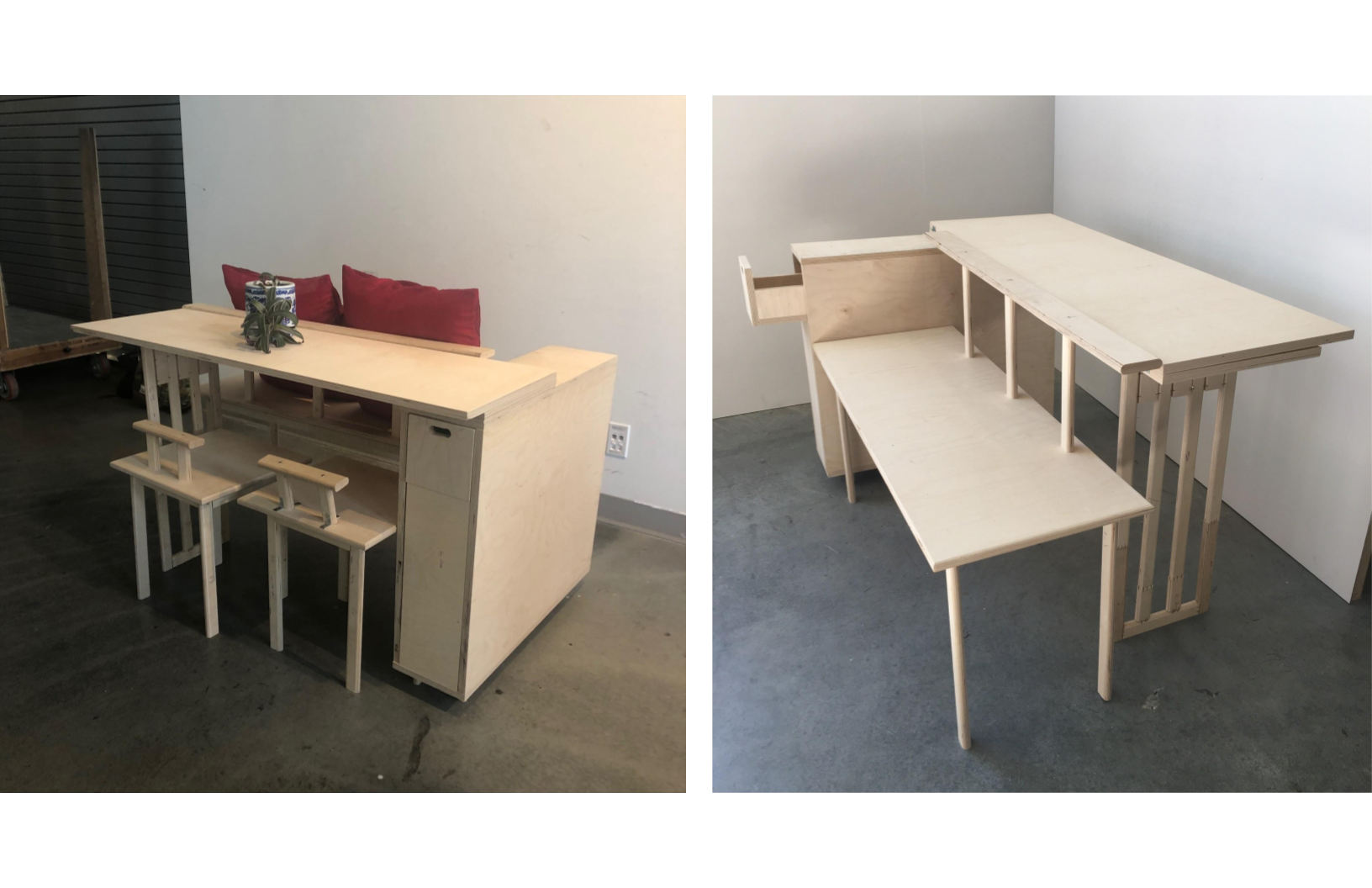
This is the finalized prototype that we built for the 2nd critique.
We received good critical feedback about our design in the second critique. We were told that although our design had hit all the aspects of eating, siting, and storing, our design was flawed in that it neglected the lightweight and compact aspect. Overall, the design had a chunky and heavy appearance. By taking the feedback into consideration, we changed our overall design and decided to keep the extendable table top and side cabinet as that was our main vision in mind. The overall size also had to be downsized and the chairs had to be tweaked in terms of ergonomics.
Refining & Validating: CAD
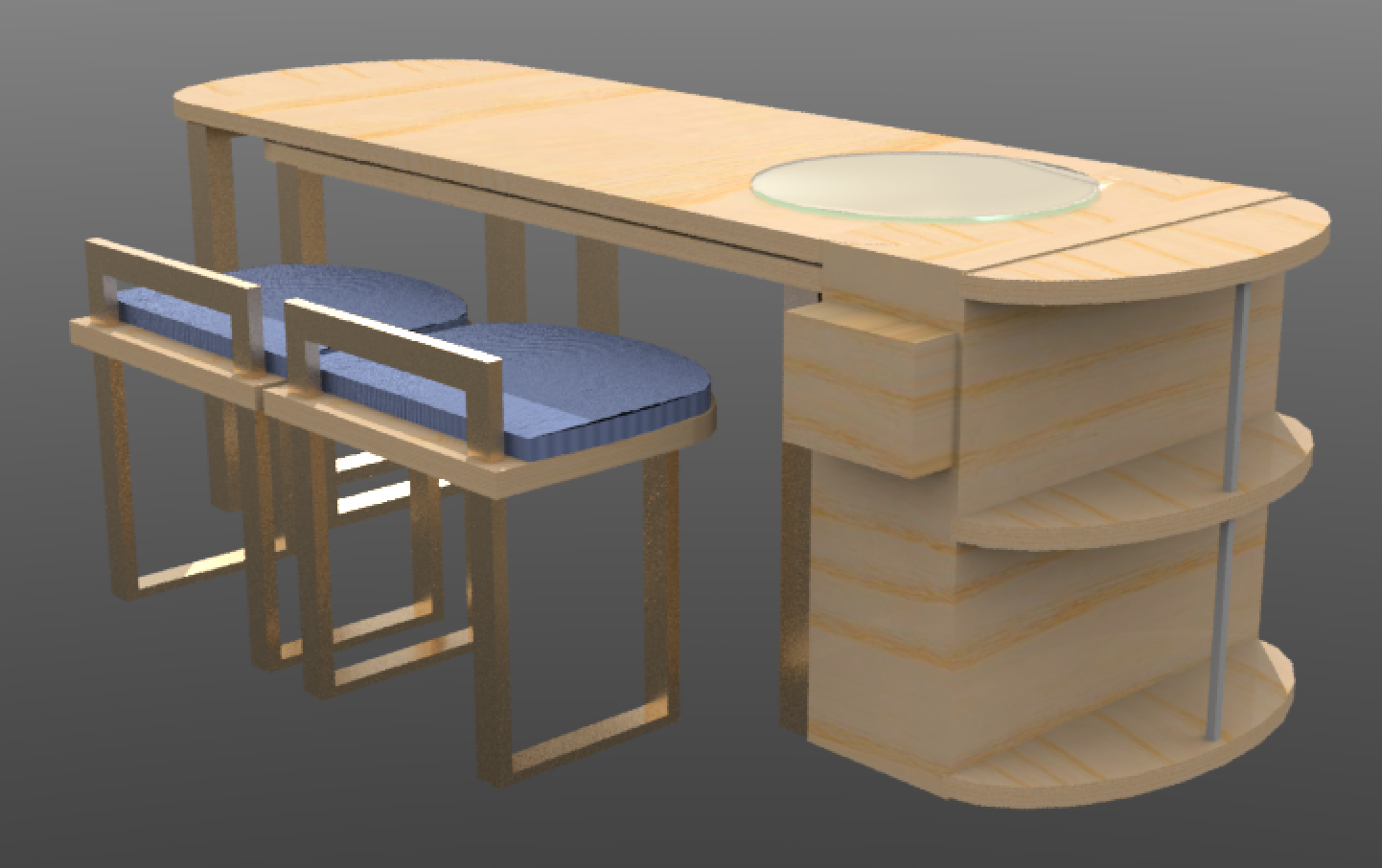
Table, Cabinet, and Seats
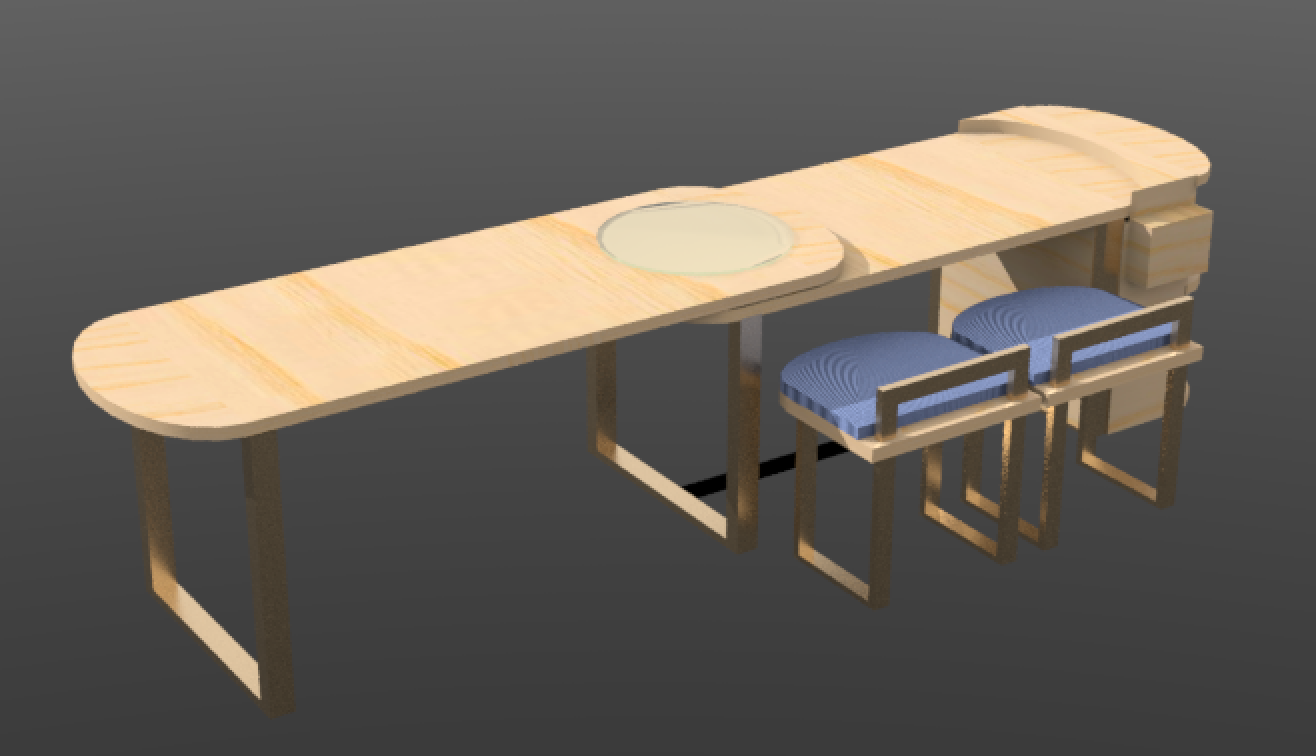
Extendable table with lip cut out
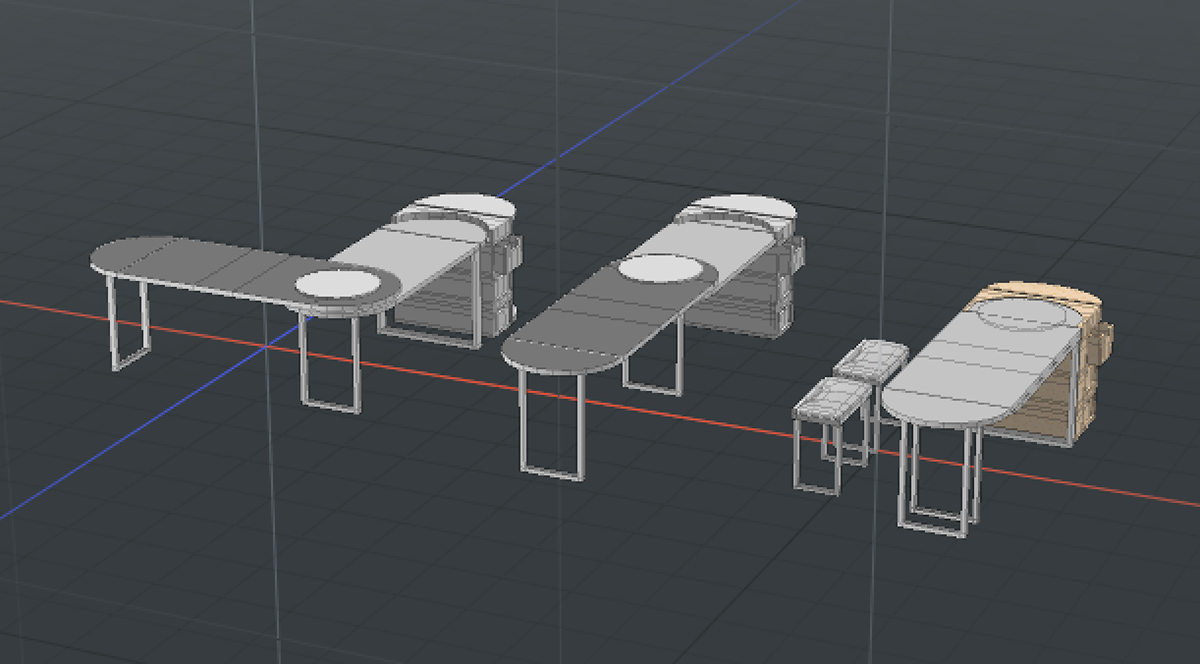
Extendable Table Layout
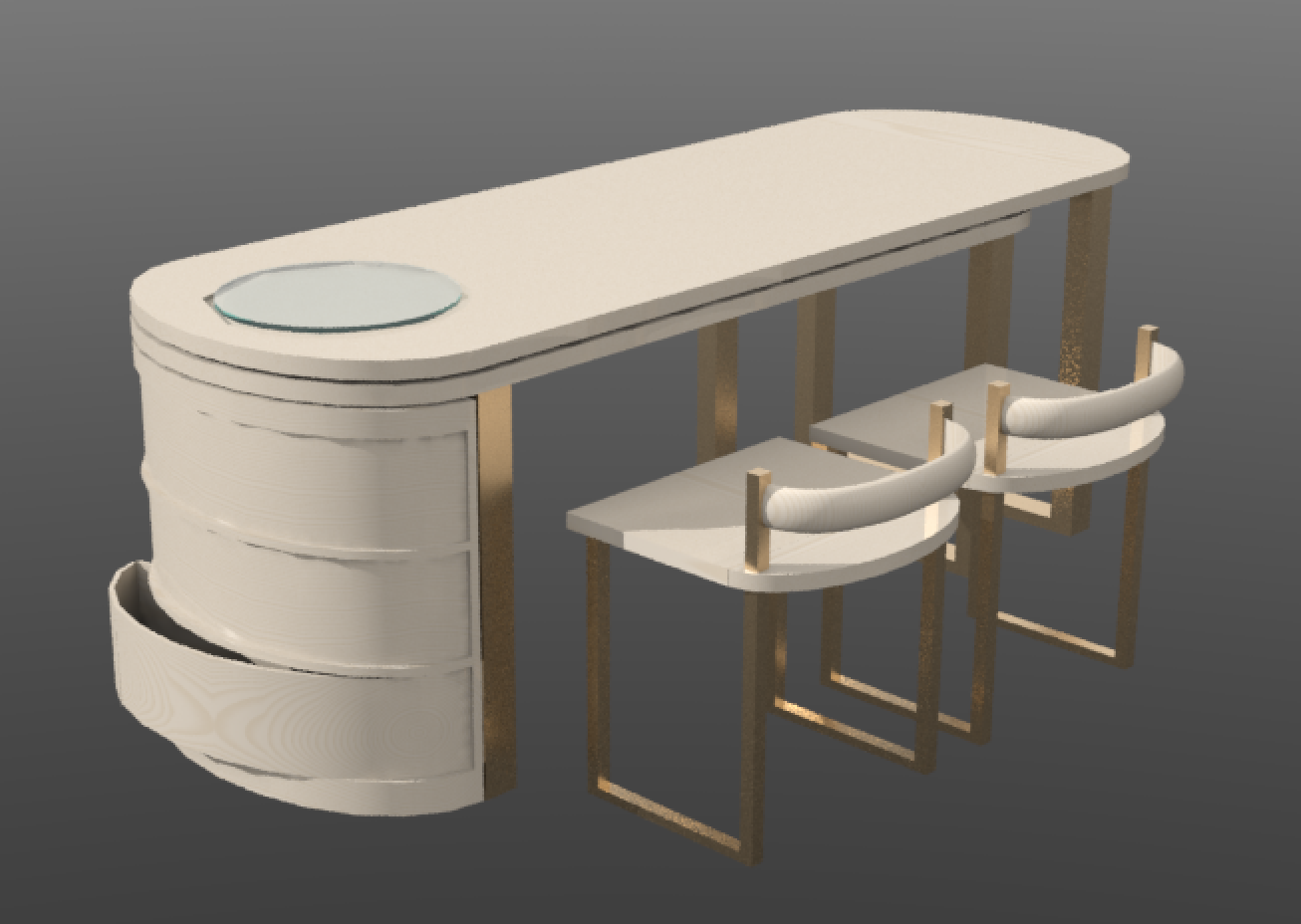
Pivot Cabinets
We used Modo to quickly modify and visualize our design along with proportions in relation to ergonomics of a human body.
Orthographic
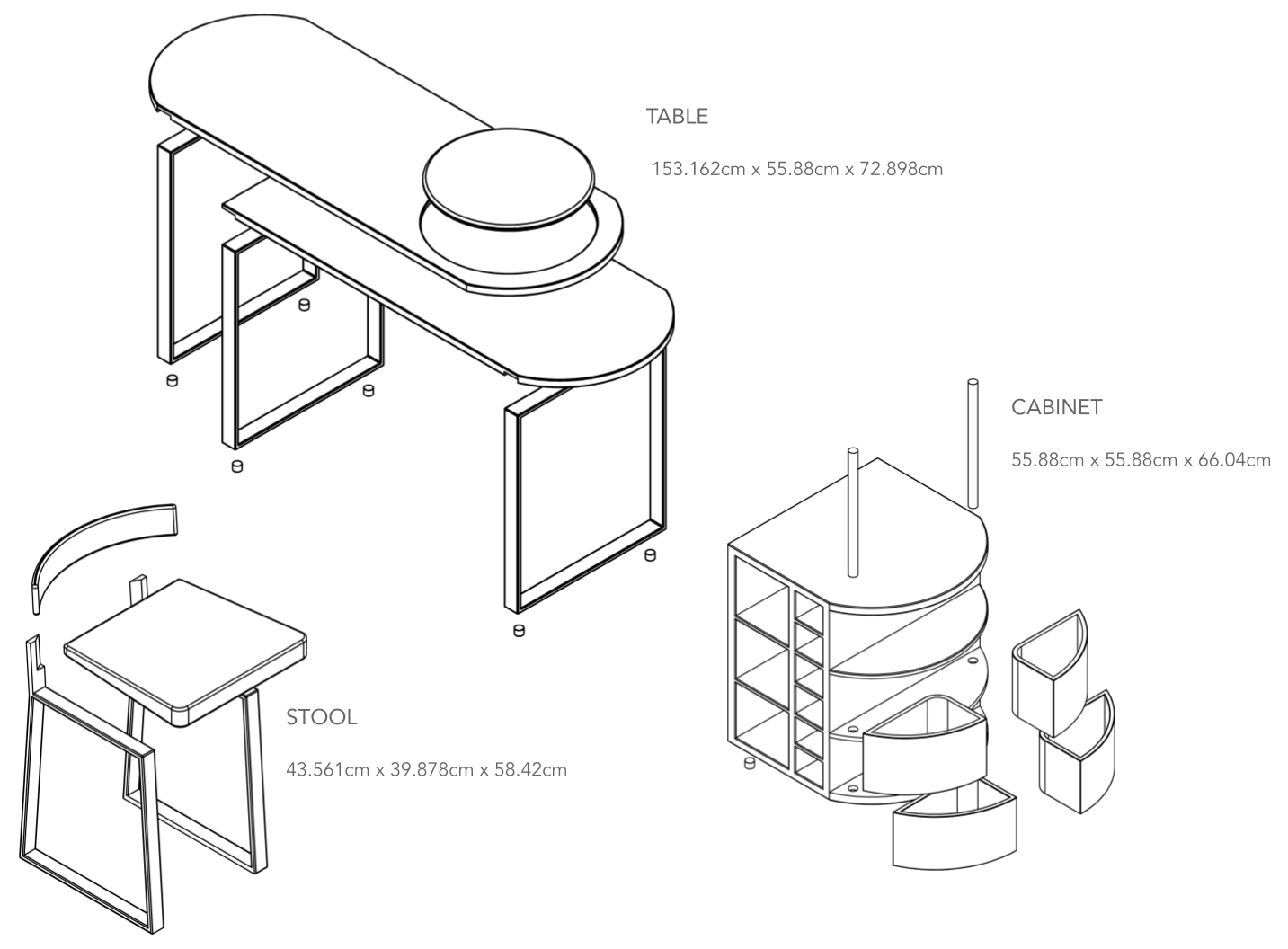
Final Design
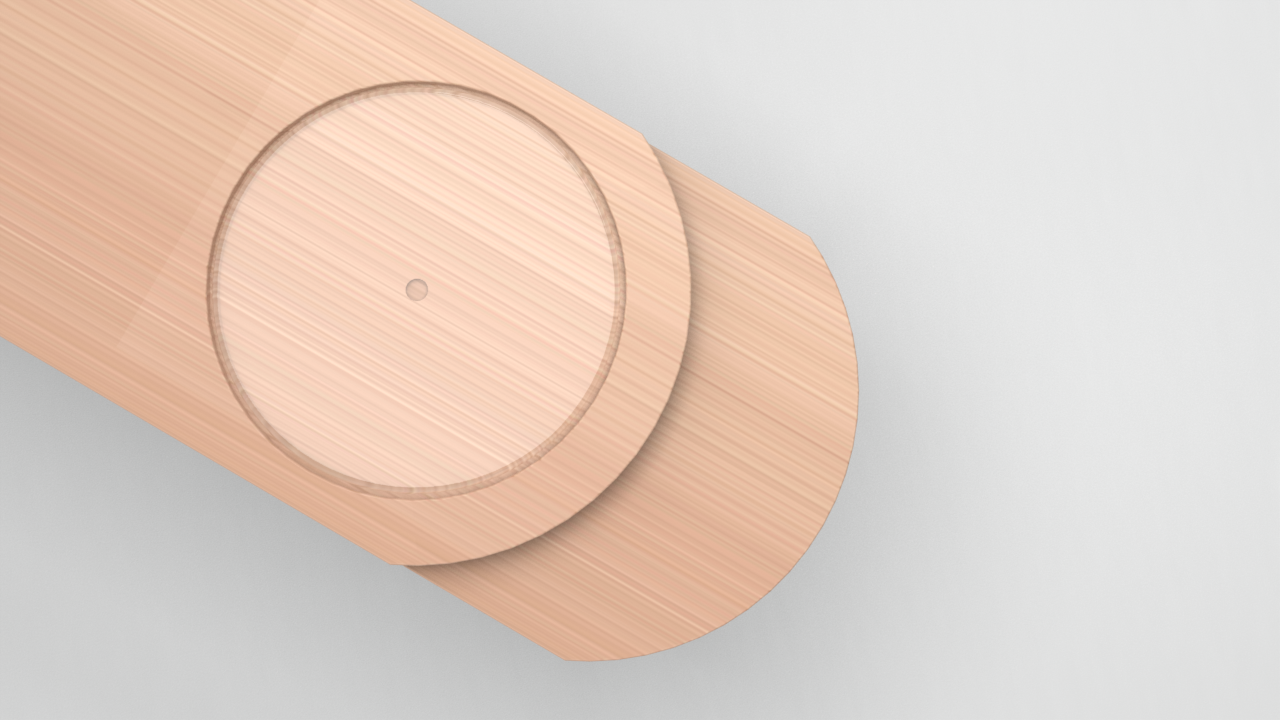
Lazy Susan
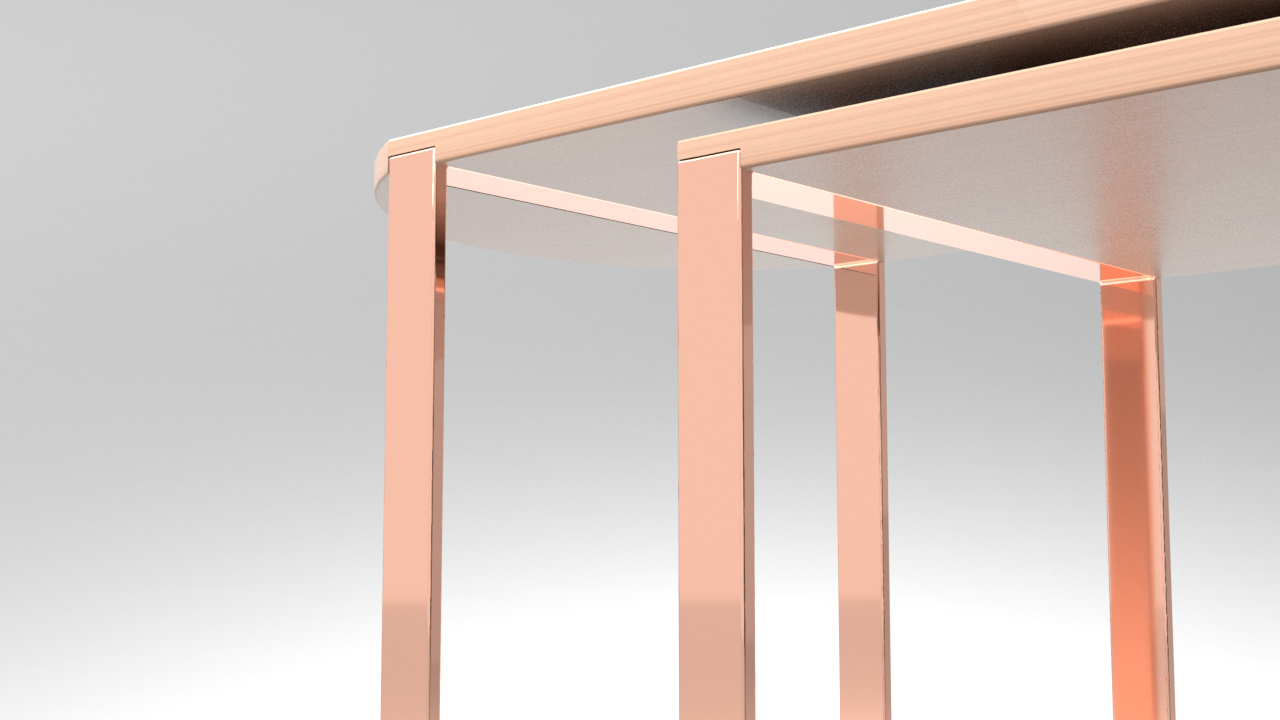
Legs
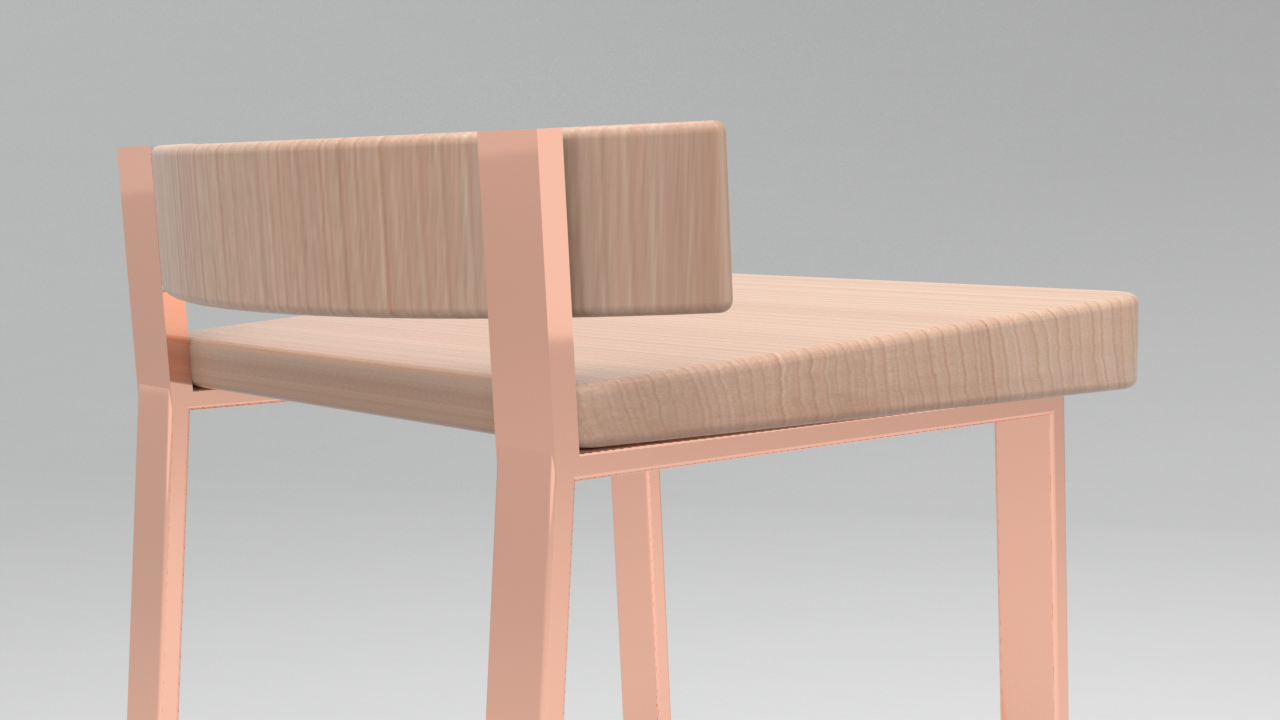
Lumbar
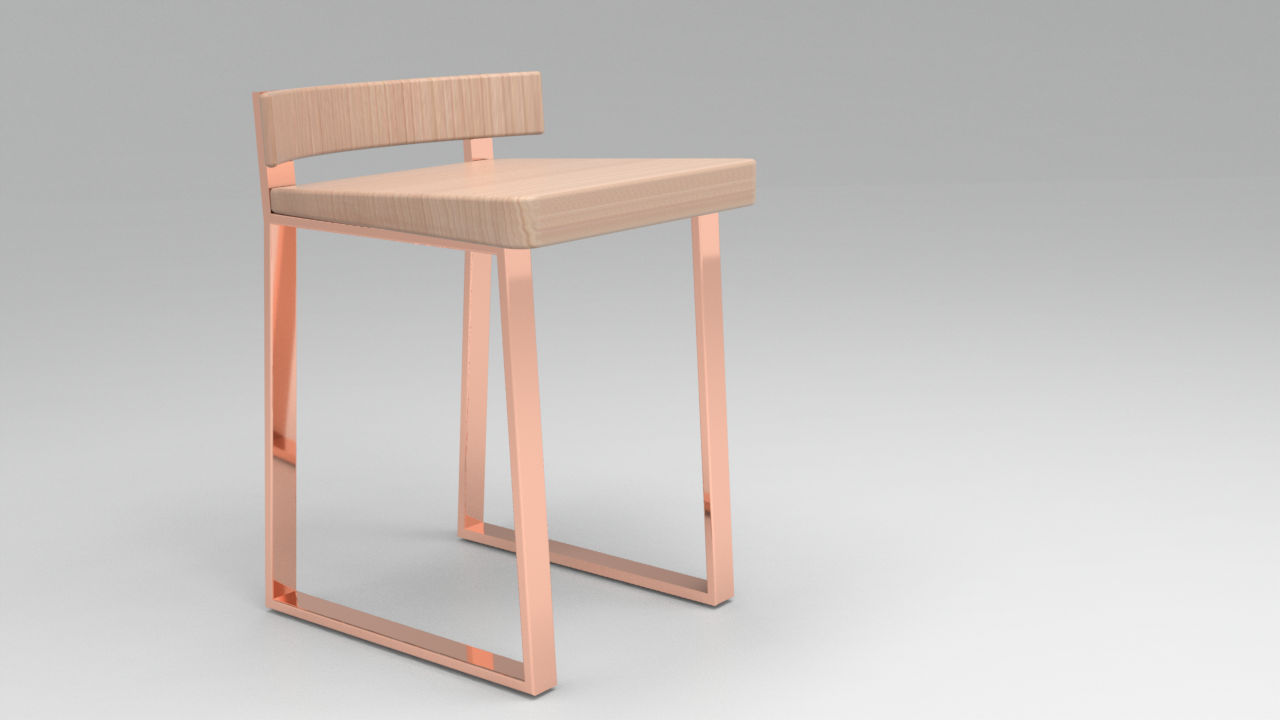
Seat
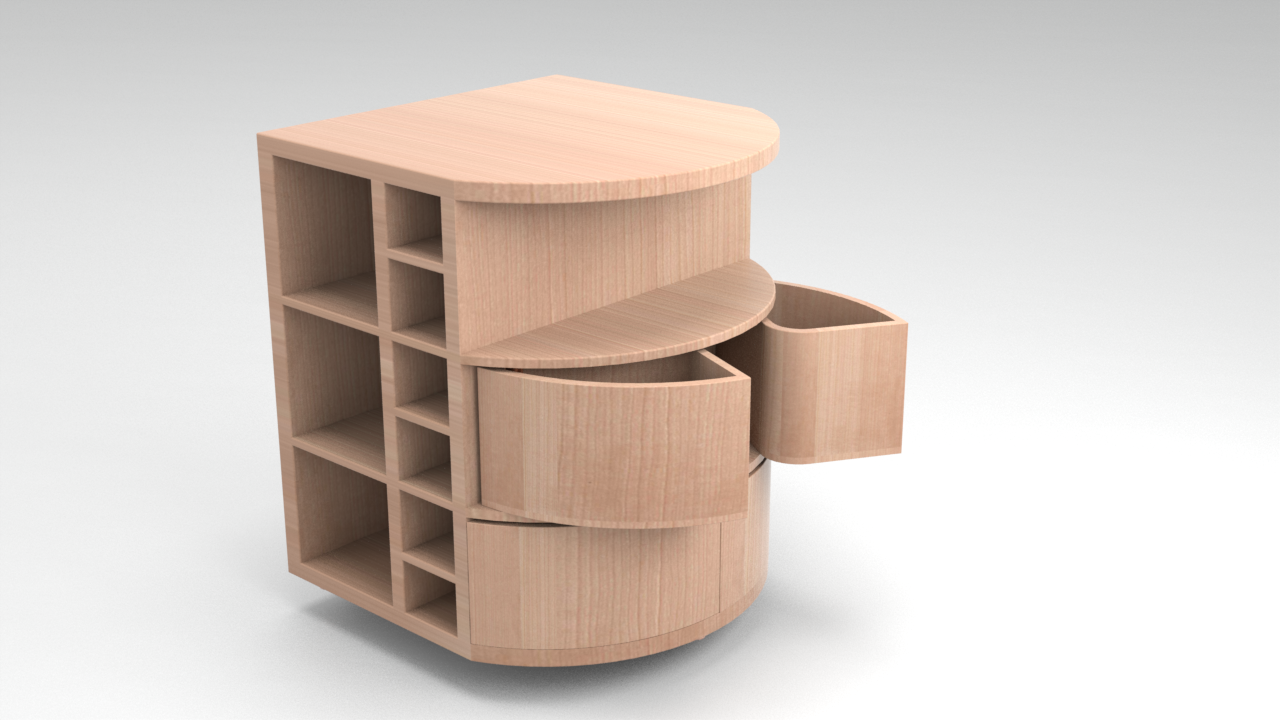
Cabinet
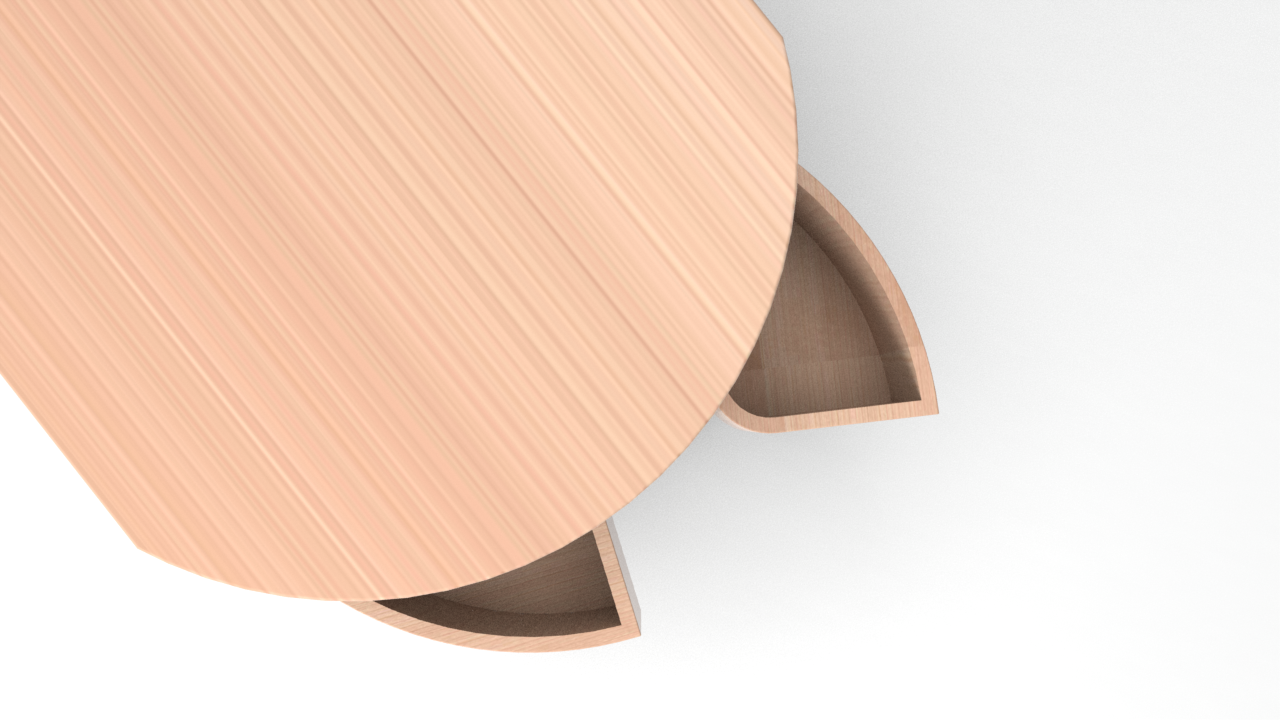
Drawer
Final Renders
Below are five scenarios of how the furniture functions in a home with gatherings of 2 or more users.
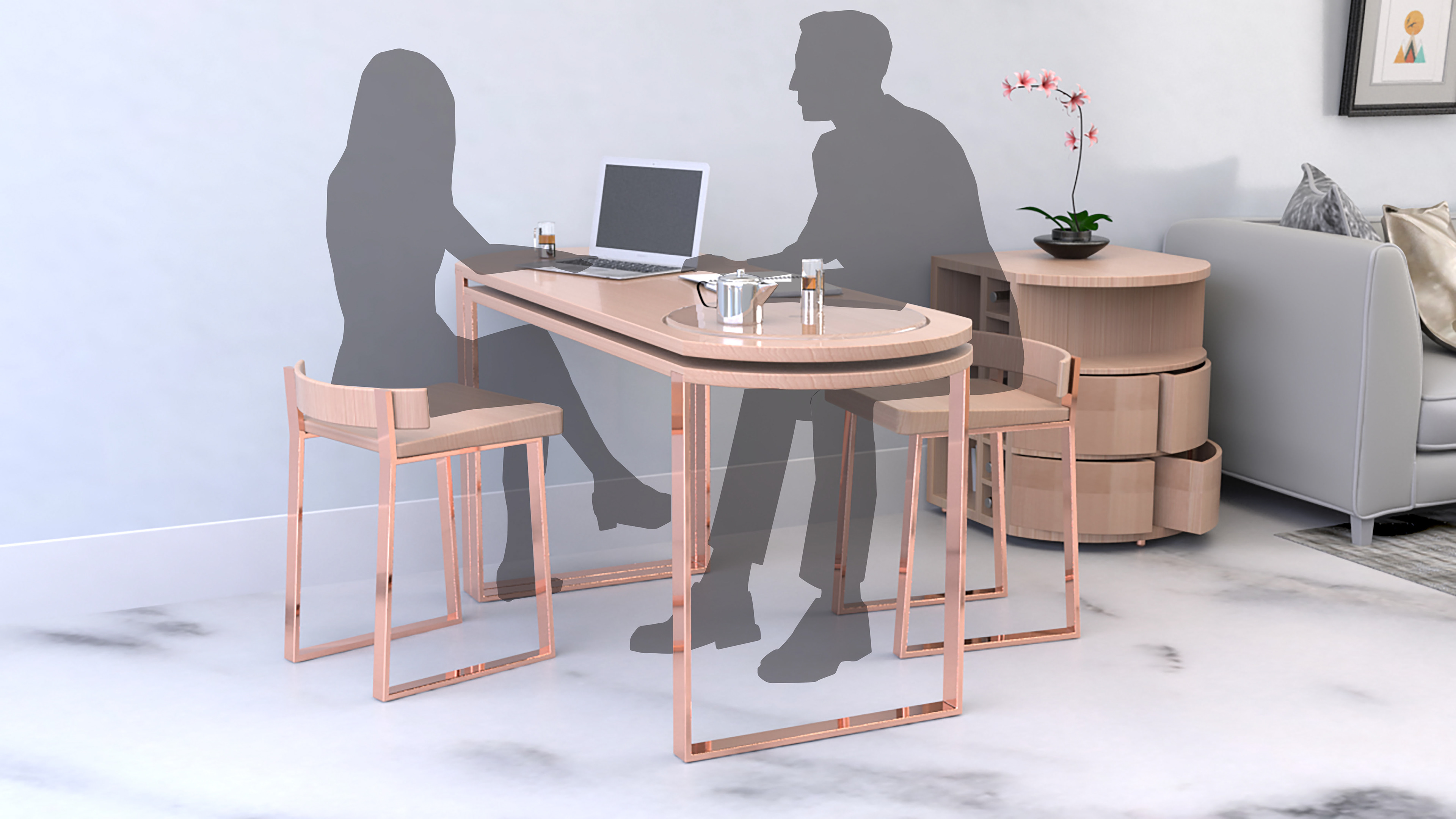
Shared Space
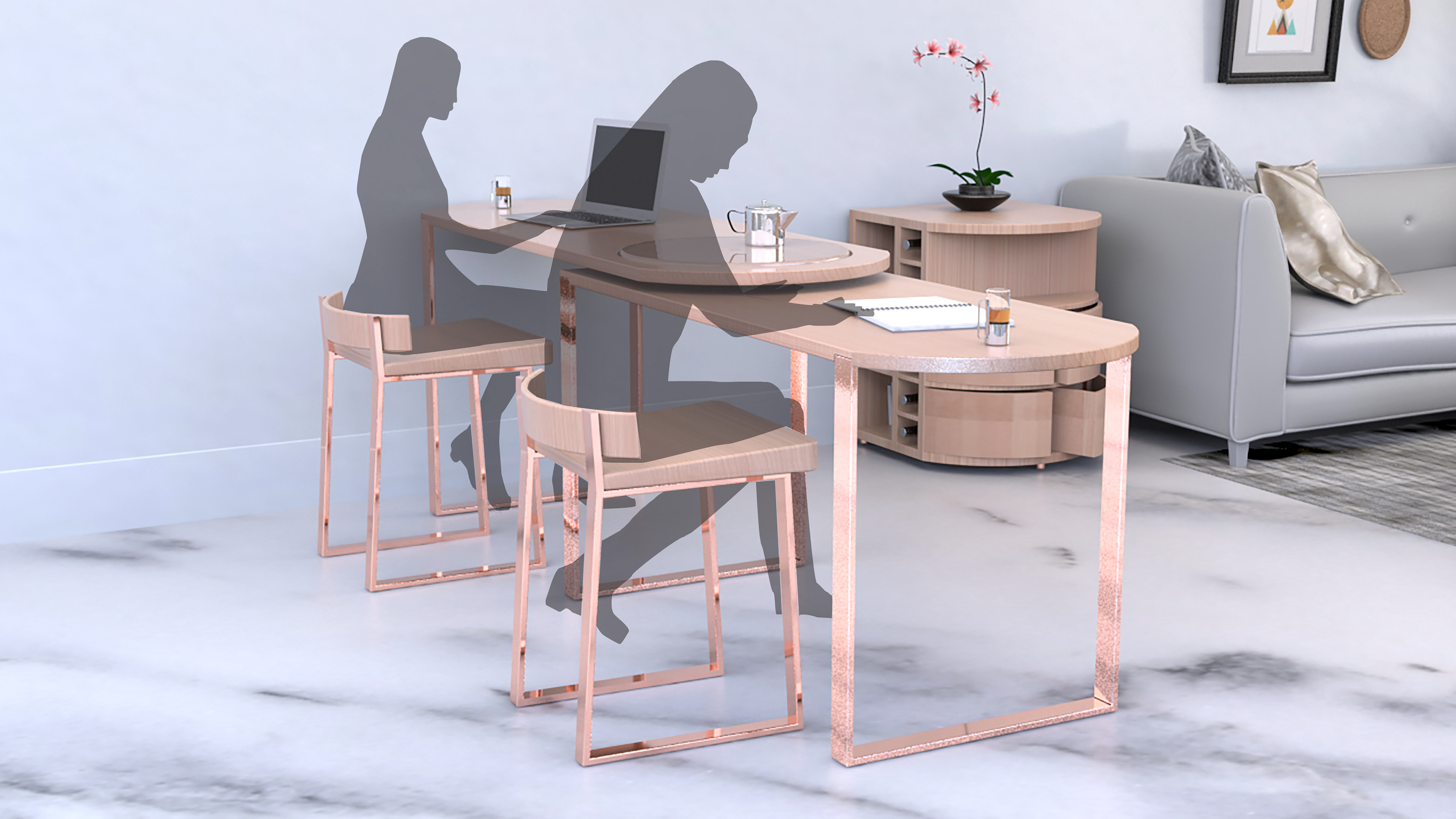
Individual Space
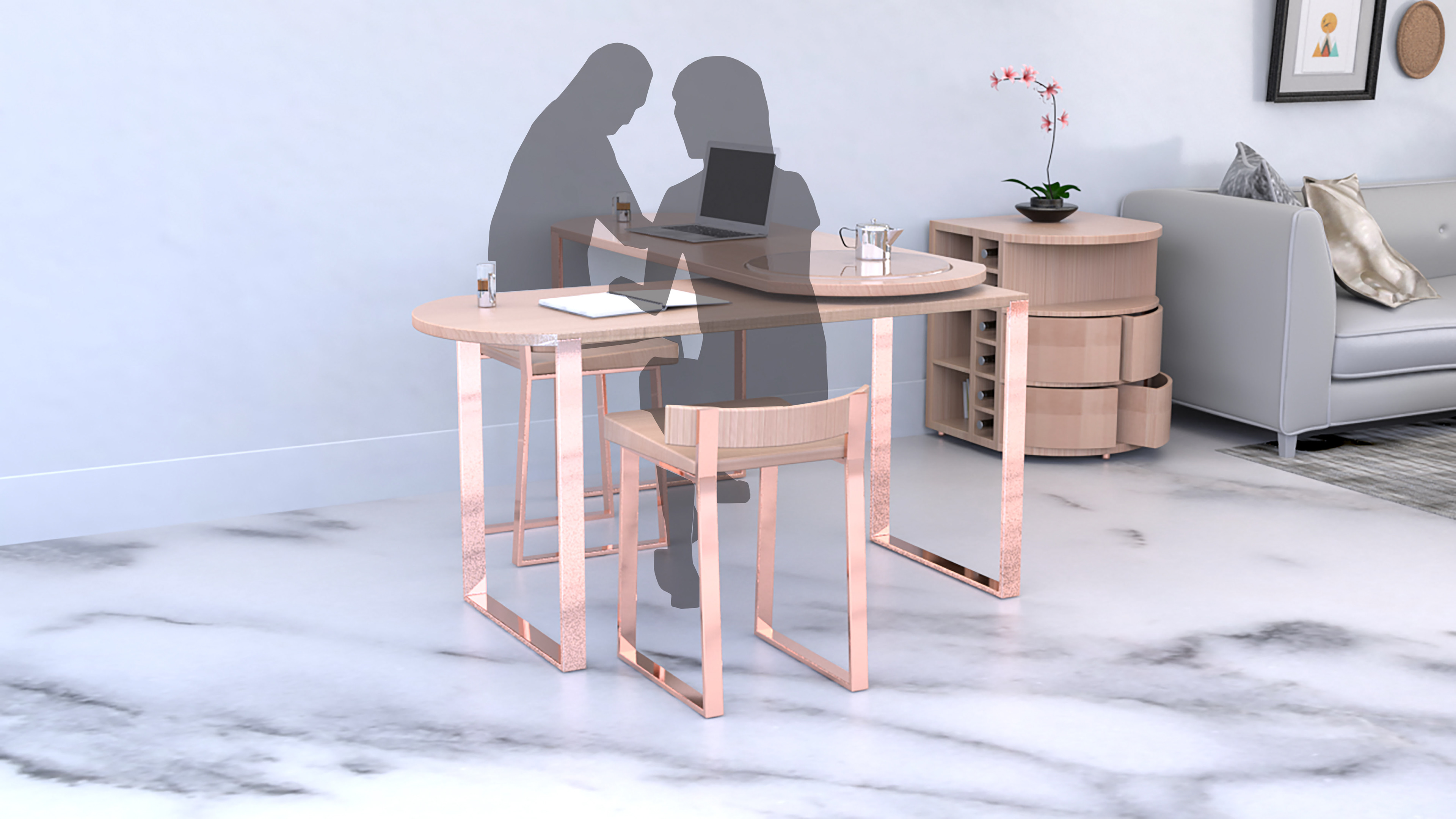
Individual Space
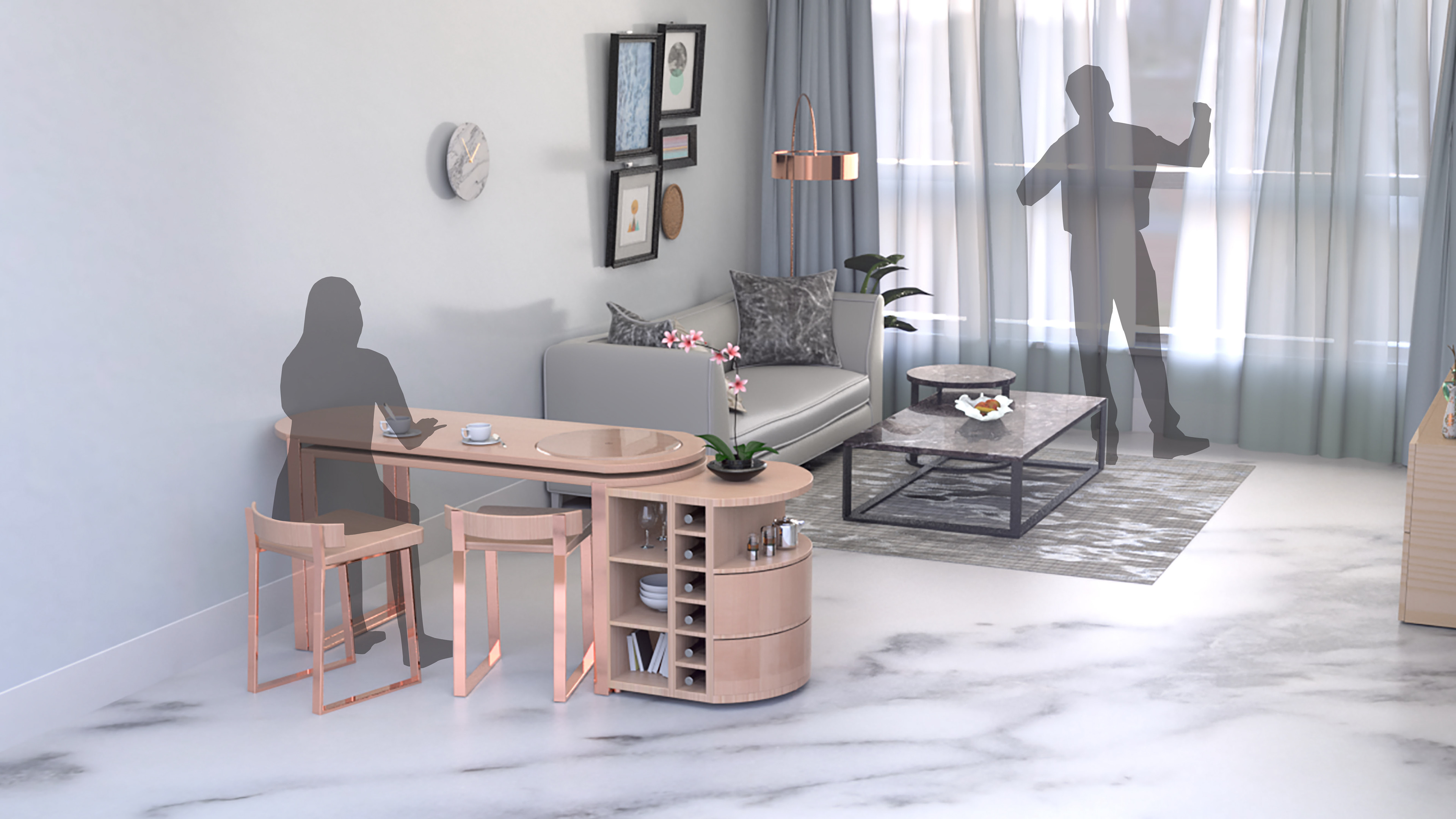
General Space
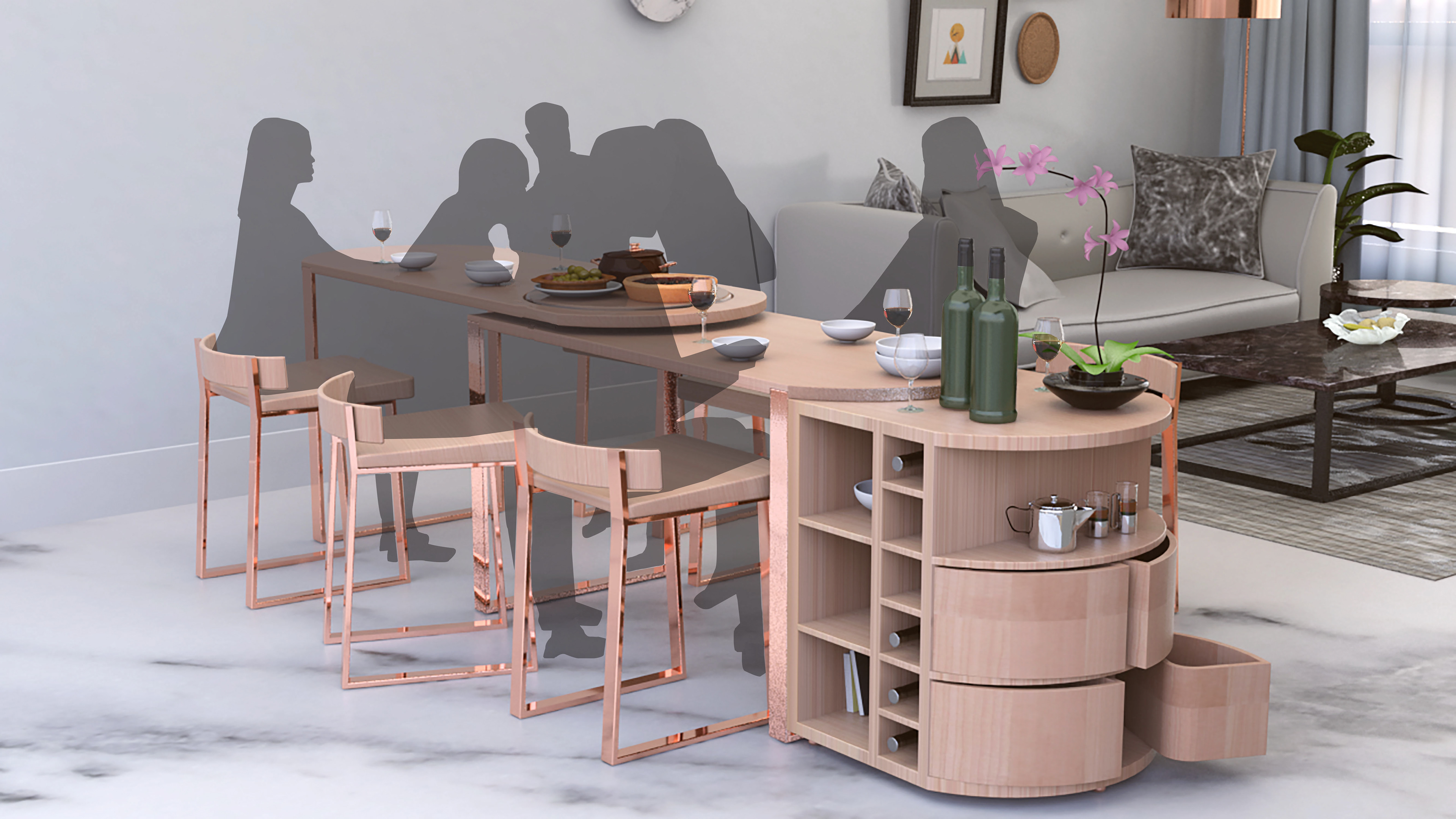
Large Gatherings
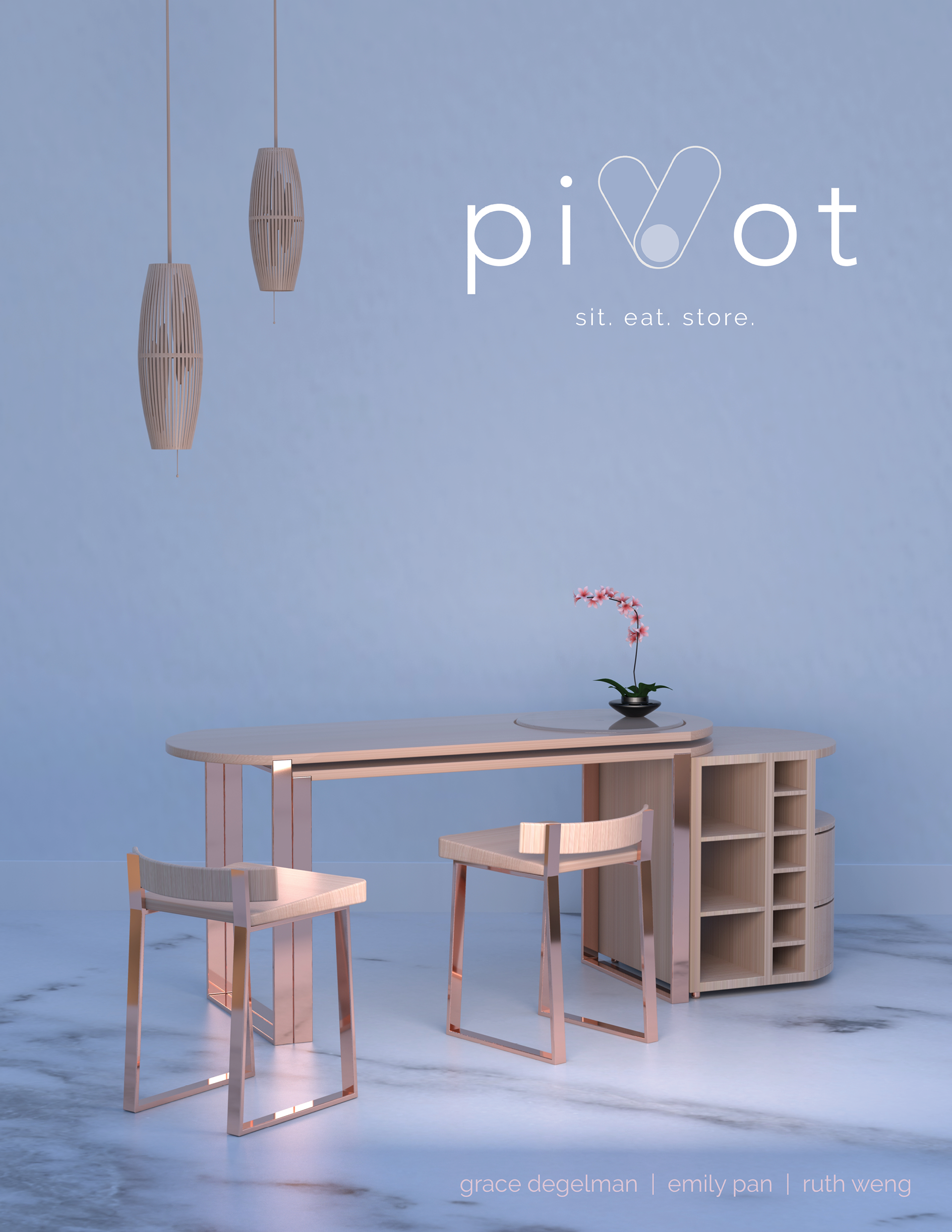
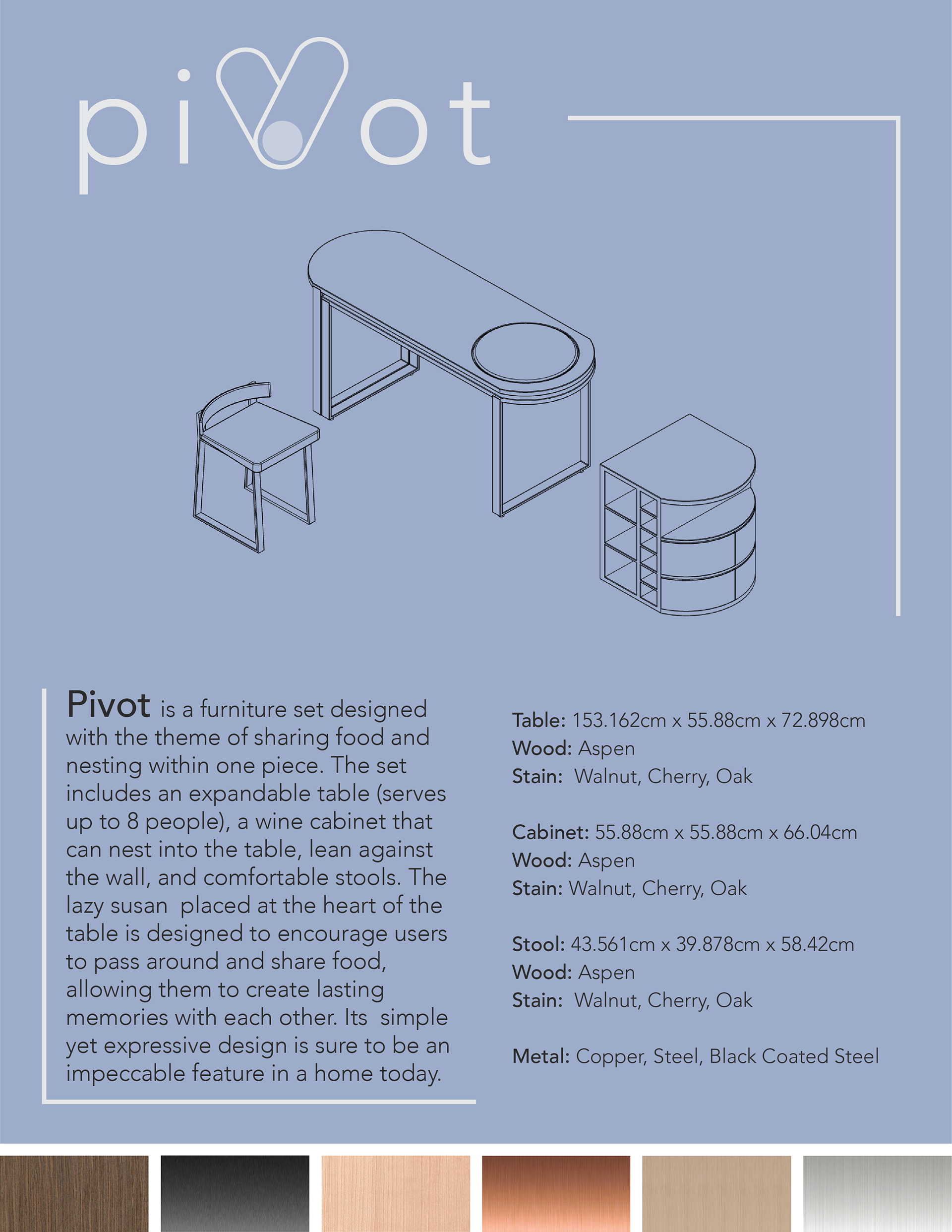
Tear Sheet
Video
Here is a clip of how our table functions. Rendered in Modo.
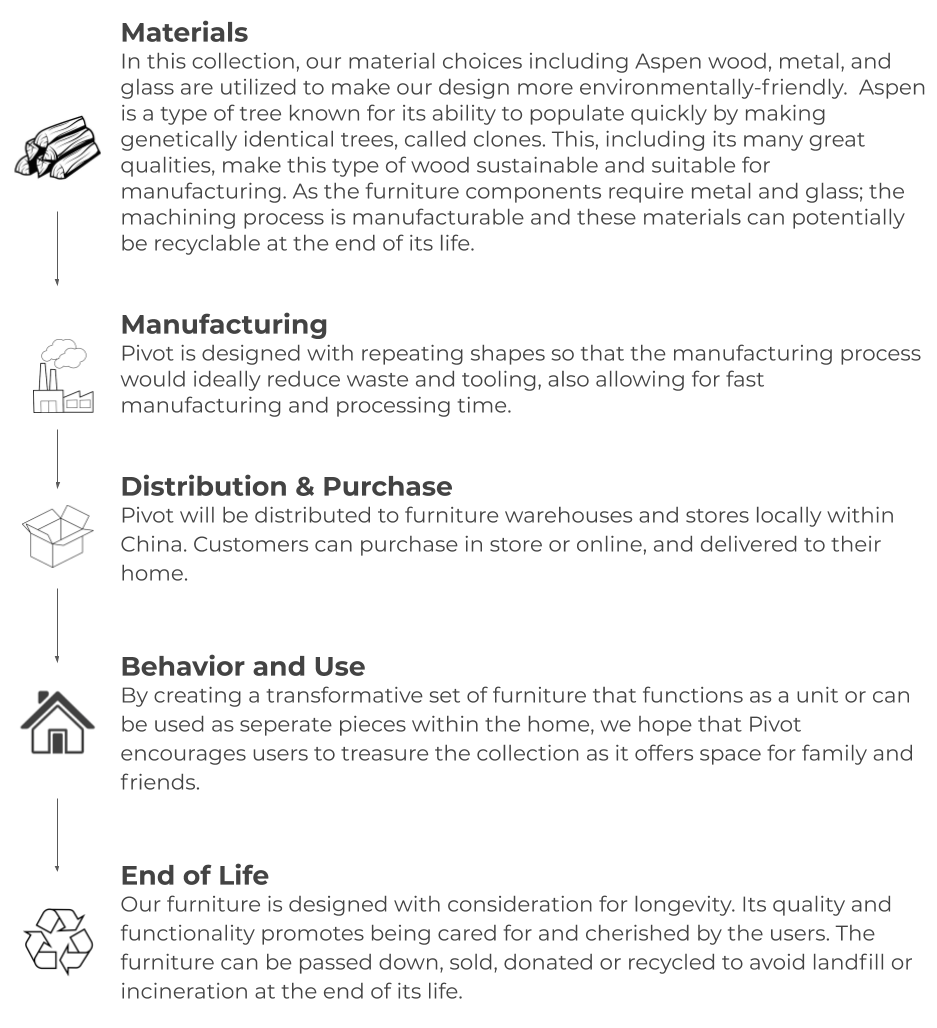
Life Cycle Analysis
Learning Outcomes
Through this design project, our team had gained valuable knowledge about the Chinese culture, sustainability, and many techniques that were used in both traditional and modern furnitures, which were able to help us push forward and challenge our designs to fit the needs of young Chinese couples residing in busy urban cities.
“Pivot” began as a set of furniture that seemingly provided banal activities around couple’s homes. But throughout our design, we were able to hone down on the importance of family gathering around Chinese culture. Thus, we were able to create a collection of furniture that not only provided its user’s spaces to work alone or with others, but it also allowed busy people to hold large gatherings for family time and socialization.
“Pivot” began as a set of furniture that seemingly provided banal activities around couple’s homes. But throughout our design, we were able to hone down on the importance of family gathering around Chinese culture. Thus, we were able to create a collection of furniture that not only provided its user’s spaces to work alone or with others, but it also allowed busy people to hold large gatherings for family time and socialization.